
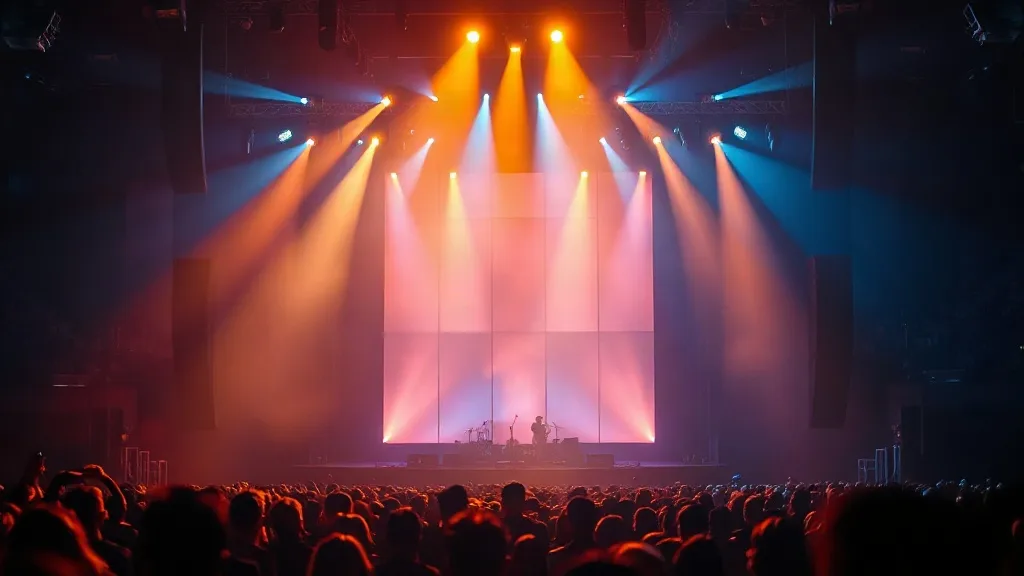
There is a particular kind of hush that falls over a country awards show when Taylor Swift walks out, and the CMA Awards got to experience it again. The pop star, whose contribution to the Toy Story 5 soundtrack marked a return to the country music world, took the stage to perform two songs that sit at opposite ends of her catalog: "Our Song," the teenage love letter that first announced her as a Nashville storyteller, and "I Knew It, I Knew You," a track from her most recent chapter. Pairing them in a single slot was not a random setlist choice. It was a small piece of autobiography performed in front of the industry that watched her grow up.
Swift is also up for single of the year at the ceremony, which gives the night an added layer of significance. An artist who has spent years operating largely outside the country format's center was back inside its biggest room, nominated in a category that rewards songwriting and radio reach in equal measure. The performance and the nomination together read as a quiet reconciliation between the genre that launched her and the artist she became after leaving its orbit.
Two Songs, Two Decades
"Our Song" arrived in 2006, when Swift was still a teenager writing about a boy, a car, and a promise made on a front porch. It was the kind of detail-rich, conversational country song that Nashville understood instinctively, and it remains one of the clearest early examples of her gift for turning ordinary adolescent moments into something that felt universal. Hearing it at a CMA ceremony nearly two decades later carries a different charge. The song no longer sounds like a debut single. It sounds like a document.
"I Knew It, I Knew You" belongs to a far more recent period, one defined by a mature, reflective perspective that only comes after a long career of public scrutiny. Placed next to "Our Song," the contrast is the point. One track is built on anticipation and innocence; the other on hindsight and recognition. Together they trace a line from a girl imagining how love might go to a woman who has lived enough of it to recognize the pattern when it appears again.
Why the Sequencing Mattered
Order is everything in a short awards-show performance. Had Swift opened with the newer song and closed with the older one, the moment would have read as nostalgia, a victory lap through the past. Reversing it turns the set into a progression. The audience starts where she started, then travels forward with her. For a room full of country executives, radio programmers, and fellow songwriters, that framing quietly makes an argument: the songwriter they first met in the mid-2000s is the same one standing in front of them now, just with more to say.
That argument matters because Swift's relationship with country music has never been simple. She left the format for pop at a moment when the crossover was still treated with suspicion in some Nashville corners, and she has spent the years since building a career that operates on its own terms. Returning to the CMAs is not a reversal of that decision. It is evidence that the genre's biggest stage still has room for her, and that she is willing to accept the invitation.
The Toy Story 5 Connection
The performance did not happen in a vacuum. Swift's involvement with the Toy Story 5 soundtrack marked a return to the country music world, and that detail gives the CMA appearance a narrative spine. Soundtracks have long been a bridge for artists who want to move between formats without abandoning either one. A song attached to a major animated film reaches audiences that never tune into a country radio station, while still carrying enough rootsy texture to be welcomed by the genre's gatekeepers.
For the CMA audience, the timing could hardly be better. A nomination for single of the year puts Swift in competition with artists who have spent the past twelve months living inside the country format full time. She has not. Yet the nomination itself acknowledges something the industry has been slow to say out loud: her songwriting remains a benchmark, regardless of which chart she happens to be occupying that year.
Reading the Room
Awards shows are as much about subtext as they are about trophies. When an artist of Swift's stature accepts a slot on a country broadcast, she lends the ceremony a level of mainstream attention that few other performers can generate. In exchange, the CMAs offer her something harder to quantify: a homecoming on her own terms, in front of the people who first championed her.
The crowd response suggested the exchange was understood on both sides. There is a specific warmth reserved for artists who started in Nashville and chose to come back, even briefly, and Swift has now collected that warmth more than once. What made this appearance different is that the setlist did the talking. No long speech, no elaborate staging concept built around a single era. Just two songs, one young and one knowing, placed side by side.
What It Signals for the Year Ahead
Performances like this rarely stay contained to the night they happen. They become reference points. A country-adjacent moment from Swift tends to reopen conversations about crossover, about how genres police their borders, and about whether an artist ever really leaves a format behind. The answer, increasingly, seems to be no. Careers are long, and the categories that define them at twenty are not the ones that define them at thirty-five.
For fans, the takeaway is simpler. Hearing "Our Song" in a room full of country peers, followed immediately by a track from her latest era, is a reminder of how unusual her run has been. Very few artists get to stand in the same spotlight twice, once as a newcomer and once as an institution, and do it with the same songs still holding up.
Frequently Asked Questions
Which songs did Taylor Swift perform at the CMA Awards?
She performed "Our Song" and "I Knew It, I Knew You" during the ceremony, pairing an early single from her debut era with a track from her most recent body of work.
Why is the performance considered a return to country music?
Swift's contribution to the Toy Story 5 soundtrack marked a return to the country music world, and her CMA appearance built on that connection by placing her back on the genre's biggest stage.
Is Taylor Swift nominated at the CMAs?
Yes. She is up for single of the year at the awards, a category that recognizes both songwriting and commercial reach within the country format.
What makes the pairing of these two songs significant?
"Our Song" represents her earliest songwriting voice, while "I Knew It, I Knew You" reflects a more experienced perspective. Performing them back to back traces the arc of her career in a few minutes.
Did the performance include any special staging or guests?
The moment centered on the two-song set itself rather than elaborate production elements, keeping the focus on the songwriting and the contrast between the two eras.